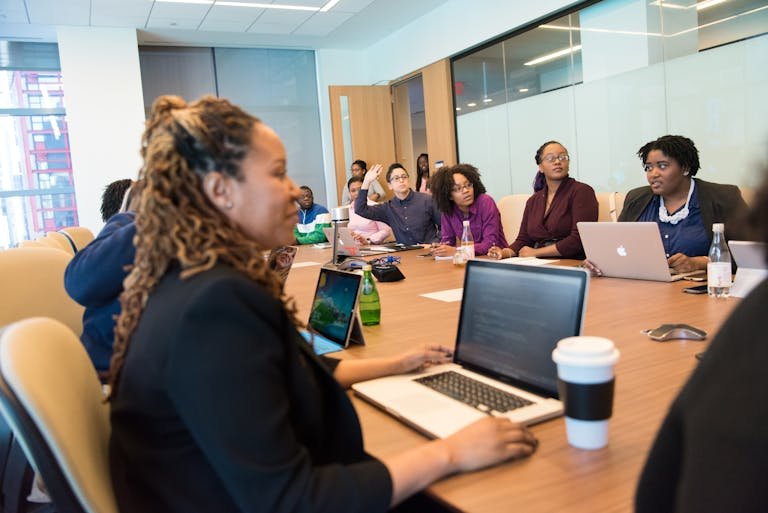

Upskilling VS Reskilling is very significant in the aspect of Nigerian organizational growth and Development. Reskilling, however, responds to deeper structural changes Upskilling focuses on helping employees perform their existing roles more effectively in a changing environment, Nigerian organizations do not need to choose between upskilling and reskilling as opposing options; rather, they require a hybrid approach, applying both based on the specific industry and pace of automation.
Upskilling works best when the core purpose of a role remains the same. Banks still need staff to manage risk, but those staff must now interpret digital alerts instead of relying solely on manual checks
Reskilling, however, responds to deeper structural changes. In some cases, technology does not just alter how a job is done, it changes the job entirely.
Why upskilling is better for immediate needs
Here are reasons they both are critical, with emphasis on why upskilling provides the immediate, needed boost in 2026.
- Improves Productivity Now: Upskilling immediately enhances the skills employees already have, leading to better performance in current roles.
- Cost-Effective: Developing existing talent is more cost-effective than navigating the expensive, slow process of external recruitment in Nigeria.
- Lowers “Japa” Impact: Investing in staff loyalty through upskilling makes them less likely to leave, helping retain talent despite emigration trends.
- Boosts Digital Competence: Many Nigerian roles exist but need digital fluency (Excel, AI tools); upskilling bridges this gap fast.
- Faster Learning Curve: Upskilling often involves short-term workshops, allowing employees to start applying new skills immediately.
- Increases Job Satisfaction: Employees feel valued when the company invests in their growth, leading to higher engagement.
- Leverages Existing Knowledge: Upskilled employees already understand company culture, saving onboarding time.
- Boosts Revenue Per Employee: A more efficient, higher-skilled
- : It creates a pool of promotable, loyal talent, reducing reliance on hiring external managers.
- Adapts to Hybrid Work: Upskilling in digital tools enables seamless remote/hybrid work, which is increasingly
Reasons Why Reskilling is Essential for Future Survival
The following are the reasons for the future survival of upskilling in an organisation:
- Survives Automation: As AI replaces routine tasks, reskilling allows employees to transition to new roles rather than being laid off.
- Fills Critical Tech Gaps: In sectors like fintech and telecom, reskilling is crucial for moving staff into high-demand roles like data analysis.
- Increases Workforce Versatility: Reskilled employees can operate across different departments, enhancing company agility.
- Enable BusinessTransformation: When a company pivots its business model, reskilling is the only way to quickly assemble a team with new competencies.
- Reduces Redundancy: Instead of firing staff in declining departments, reskilling re-deploys them, maintaining institutional knowledge.
- Enables Global Outsourcing: Reskilling Nigerian staff in global technologies allows firms to take on international clients.
- Prepares for AI-Human Collaboration: Reskilling helps employees move from manual processes to working alongside AI systems.
- Builds a Culture of Learning: Implementing reskilling programs fosters an adaptive workforce that is not afraid of change.
- Long-term Resilience: Reskilling gives workers skills that are more resistant to future industry disruptions ensuring long term employment.
20 Functions of Upskilling
The following are the main functions of upskilling in an organization.
1. Improves Employee Performance
Upskilling enhances existing skills, helping employees perform their current roles more effectively.
2. Increases Productivity
Better-skilled employees complete tasks faster and with fewer errors.
3. Enhances Job Satisfaction
Learning new skills makes employees feel more competent and confident in their roles.
4. Boosts Employee Engagement
Continuous learning keeps employees mentally involved and motivated at work.
5. Supports Career Growth
Upskilling prepares employees for promotions and higher responsibilities.
6. Reduces Skill Obsolescence
It ensures employees stay relevant as industries evolve.
7. Strengthens Organizational Competitiveness
A highly skilled workforce helps the organization stay ahead of competitors.
8. Encourages Innovation
New knowledge and skills often lead to fresh ideas and creative problem-solving.
9. Improves Quality of Work
Employees with updated skills produce higher-quality results.
10. Facilitates Digital Transformation
Upskilling helps employees adapt to new technologies and digital tools.
11. Builds Leadership Capacity
Training programs can prepare employees for future leadership roles.
12. Reduces Employee Turnover
Employees are more likely to stay when they see growth opportunities.
13. Saves Recruitment Costs
Developing current employees reduces the need to hire externally.
14. Enhances Team Collaboration:
Shared learning experiences improve communication and teamwork.
15. Increases Organizational Agility:
A skilled workforce can quickly adapt to changes in the market or operations.
16. Improves Customer Satisfaction:
Better-trained employees deliver improved products and services.
17. Strengthens Employer Brand:
Organizations known for developing their people attract top talent.
18. Promotes Knowledge Sharing:
Upskilled employees can train others, spreading expertise internally.
19. Aligns Workforce with Business Goals:
Training ensures employees’ skills match the organization’s strategic direction.
20. Supports Risk Management and Compliance:
Training helps employees understand regulations, safety standards, and best practices.
4 top Differences Between Upskilling and Reskilling
Below are the core differences between upskilling and Reskilling in an organization :
(A )Core Purpose & Focus
- Objective: Upskilling aims to make an employee better at their current job; reskilling prepares them for a new role.
- Focus: Upskilling enhances specific competencies in a current field, whereas reskilling develops new competencies for a different function.
- Career Ladder: Upskilling moves an employee up the same career ladder; reskilling is changing to a new ladder altogether.
- Specialization vs. Versatility: Upskilling creates specialists (vertical growth), while reskilling creates versatile, agile employees (horizontal/lateral growth).
- Depth of Change: Upskilling is about sharpening existing skills, while reskilling requires learning new skills from scratch.
(B) Skill Application & Scope
1. Scope of Skills: Upskilling involves deepening existing knowledge; reskilling involves acquiring completely new skill sets.
2. Relationship to Old Role: Upskilled skills are directly related to current work; reskilled skills may be entirely unconnected to the previous role.
3. Adaptation Need: Upskilling prepares employees to keep pace with innovation and technology changes in their current job.
4. Job Security: Reskilling is often a direct response to a role becoming obsolete due to automation.
5. Scope of Task: Upskilling increases proficiency, while reskilling enables taking on completely new responsibilities.
( C) Training & Implementation
1. Training Duration: Upskilling often involves shorter, targeted training (workshops, certifications).
2. Training Complexity: Reskilling typically involves longer, more intensive training programs (bootcamps, new certifications).
3. Learning Curve: Upskilling has a lower, faster learning curve; reskilling has a higher, longer learning curve.
4. Source of Training: Upskilling may be on-the-job, while reskilling often requires more formal retraining.
5. Target Audience: Upskilling is applied to workers performing well but needing to update skills; reskilling is often for workers facing redundancy.
( D) Outcome & Strategic Impact
1 Career Movement: Upskilling leads to vertical career advancement; reskilling leads to lateral or horizontal movement.
2. Role Retention: After upskilling, the employee stays in their job. After reskilling, the employee moves to a new position.
3. Immediate Goal: Upskilling increases immediate productivity; reskilling builds long-term, future-ready adaptability.
4. Organizational Impact: Upskilling improves performance of existing teams; reskilling re-deploys talent into new, emerging areas.
5. Organizational Goal: Upskilling focuses on specialization; reskilling focuses on retention and workforce restructuring.
Problems of Reskilling in Nigerian Companies
The problems affecting the of upskilling is as follows;
1 High cost of training:
Developing and delivering training programs (courses, tools, instructors) can be expensive.
2. Time Constraints:
Employees may struggle to balance learning with their daily job responsibilities, reducing productivity in the short term.
3. Resistance to Change:
Some employees may be unwilling or uncomfortable learning new skills, especially if they are used to old methods.
4. Unclear Training Needs:
If the organization doesn’t properly identify skill gaps, upskilling efforts may be irrelevant or ineffective.
5. Lack of Immediate Results:
Upskilling takes time, and organizations may not see quick returns on their investment.
6. Employee Turnover After Training:
Workers may leave the organization after gaining new skills, resulting in a loss of investment.
7. Inadequate Training Resources:
Poor-quality materials, trainers, or tools can limit the effectiveness of upskilling programs.
8. Difficulty Measuring Impact:
It can be hard to evaluate whether upskilling has improved performance or contributed to business goals.
9. Technology Barriers:
Some employees may struggle with digital learning platforms or new technologies.
10. Unequal Learning Opportunities:
Not all employees may get equal access to upskilling, leading to dissatisfaction or inequality.
11. Skill Application Gap:
Employees may learn new skills but not get the opportunity to apply them in their roles.
12. Overload and Burnout:
Too much training alongside regular work can lead to stress and fatigue.
13. Misalignment with Business Goals:
Training programs may not match the organization’s strategic direction.
14. Limited Management Support:
If leadership doesn’t actively support upskilling, employees may not take it seriously.
15. Cultural Barriers:
A workplace culture that doesn’t encourage learning can hinder upskilling efforts.
16. Rapid Skill Obsolescence:
In fast-changing industries, newly learned skills can quickly become outdated.
17. Lack of Motivation:
Employees may not see personal benefits in upskilling and therefore show low interest.
18. Poor Program Design;
Training that is too theoretical or not practical can fail to deliver real value.https://www.youtube.com/watch?v=7GG44e-E86M
FINAL THOUGHT
Upskilling is better for fixing immediate performance and retaining staff, while reskilling is better for long-term strategic survival in the face of technology.