Code of Conduct and Anti-Bribery Training in Nigeria: Legal Requirements and Best Practices

Most Nigerian employers have a code of conduct. Far fewer can show that their staff understand it well enough to act on it at the moment it matters: when a supplier offers a “token of appreciation”, when a relative’s company bids for a contract, or when a clearing agent says the port officer “needs something small”. That gap is what anti-bribery training in Nigeria is meant to close, and it is also where most programmes quietly fail. A policy that sits in an onboarding pack and a one-hour slide deck that everyone clicks through are not the same thing as a workforce that recognises a bribe when it is dressed up as hospitality.
This article is for HR, compliance and L&D leaders who have to design that training. It covers what Nigerian law says (and does not say) about bribery in the workplace, what two very different real cases teach about how bribery actually moves through a company, and what the available evidence suggests about training that changes behaviour rather than merely recording attendance. It is not legal advice; confirm your specific obligations with counsel.
What does “bribery” mean in a workplace setting, as opposed to a courtroom?
Employees rarely meet bribery as a clean offer of cash. They meet it as a grey situation, and training has to prepare them for the grey. In practice, the situations fall into five groups:
- Gifts and hospitality. A vendor sends a hamper at Christmas, invites a procurement officer to an all-expenses trip, or offers a “thank you” after a contract award.
- Payments to officials. A staff member is asked to pay something extra to speed up a permit, a customs release, a licence renewal or a utility connection. These are often called facilitation payments, and they are still payments to secure an official act.
- Conflicts of interest. A manager awards work to a company owned by a spouse, sibling or close friend, or sits on both sides of a deal without telling anyone.
- Third parties. An agent, consultant or distributor does what the company cannot do directly, and the company chooses not to ask how.
- Disguised payments. Commissions, “marketing fees”, donations and consultancy retainers that carry no real service behind them.
A code of conduct that lists “no bribery” in one sentence says nothing useful about any of these. Good training takes each group, shows what it looks like in the employee’s own job, and tells them exactly who to ask and what to record. If your training also needs to cover how staff report concerns, the separate question of reporting channels is covered in our guide to whistleblower policy training and the compliance gap. This article stays with the front end: recognising and avoiding the problem.
It also helps to be clear about who needs to be trained. Most programmes aim at everyone equally, yet exposure is concentrated. A small group (procurement, sales, finance, logistics and anyone who deals with regulators or approves third-party payments) carries most of the risk, while the rest of the workforce mainly needs to recognise a problem and know where to take it. Splitting the audience this way lets you give the high-exposure group longer, more detailed scenarios and everyone else a short, sharp module.
It also gives you a sensible answer when a manager asks why their team has to spend an hour on something that “does not apply to us”: it applies differently, and the training says how. Designing for exposure also keeps the programme honest about its limits. No course can make a person incorruptible, but a well-aimed one can make sure that the people most likely to face an offer know what to refuse, what to record and whom to tell before the moment arrives.
What does Nigerian law say about bribery, and where does the employer fit in?
The main federal statute is the Corrupt Practices and Other Related Offences Act, 2000, which set up the Independent Corrupt Practices and Other Related Offences Commission (ICPC). Reading the Act as published by the ICPC and a second copy of the Act’s text, the provisions most relevant to an employer are these:
- Sections 8, 9 and 10 cover corruptly asking for, receiving, giving or offering a benefit in connection with official acts. Each carries up to seven years’ imprisonment. Where a public officer receives a benefit from someone with an interest in their work, the Act presumes it corrupt unless the contrary is proved.
- Section 17 covers gratification given to or accepted by an agent, including false documents given to a principal, with a penalty of up to five years’ imprisonment. The Act’s definition of “agent” is broad, which matters for employees and intermediaries acting for a company.
- Section 18 covers bribery of public officers, with up to five years’ imprisonment with hard labour.
- Section 20 requires forfeiture of the gratification and a fine of not less than five times its value (or ₦10,000, whichever is higher).
- Section 23 imposes a duty to report. A person from whom gratification is solicited must report it at the earliest opportunity, and failure to do so without reasonable excuse carries a fine of up to ₦100,000, up to two years’ imprisonment, or both.
Three points deserve care. First, the fixed naira amounts in the Act are small by today’s standards, so the practical deterrent is the imprisonment, the forfeiture and the fine of five times the gratification, not the nominal figures. Second, in the text reviewed, the Act has no dedicated section on offences by companies. Section 2 defines “person” to include corporate and unincorporated bodies, so the offences can reach them, but how that works for a particular company is a question for counsel, and this article does not claim to state the position on corporate liability.
Third, other laws sit alongside the federal Act: the CMS expert guide on Nigeria notes that Lagos State’s Criminal Law 2011 (section 83) makes it an offence to give an undue advantage to a person in the private sector, and to accept one, and that its summary tables treat corporate hospitality and facilitation payments as caught under the federal and Lagos regimes. The same guide notes that gifts to public officers from firms with government contracts are presumed to breach the Code of Conduct Act unless the contrary is proved, which is why a sales team that gives gifts to officials needs very specific guidance.
Governance codes add an expectation of their own. Under the 2018 Nigerian Code of Corporate Governance, which applies to all public companies (listed or not), certain holding companies and regulated private companies, boards are expected to model “a top-down commitment to professional business and ethical standards” (recommended practice 24.1), to monitor adherence to the code of conduct, and to have policies that address corruption and conflicts of interest, with conflicts declared on appointment and annually thereafter. The Code is about boards and directors, but it sets the tone for what the rest of the organisation is expected to follow.
How big is the problem, and why does training sit in the middle of it?
Nigeria scored 26 out of 100 in Transparency International’s 2025 Corruption Perceptions Index and ranked 142nd of 182 countries, two places lower than in the previous year, with the score unchanged, according to Nairametrics’ report on the results. The CPI measures perceived public-sector corruption, so it is not a measure of how your own staff behave, but it does describe the environment in which your employees negotiate permits, tenders and approvals every week. Maíra Martini, Chief Executive Officer of Transparency International, said in the release: “People are paying the price, as corruption leads to under-funded hospitals, unbuilt flood defences and blights the hopes and dreams of young people.”
For employers, the more useful data is inside the organisation. The Association of Certified Fraud Examiners’ 2024 Occupational Fraud report, based on more than 1,900 cases in 138 countries, found that 43% of frauds were detected through tips, the most common method. Employees supplied 52% of those tips, according to a summary of the report.
The same summary reports that organisations with reporting mechanisms, and organisations providing fraud training to managers and employees, had losses roughly 50% and 47% lower respectively. These are associations rather than proof of cause, since organisations that invest in training may differ in other ways, but they point the same way as common sense: staff who can recognise a problem and know where to take it are the best early-warning system a company has.
What can a real case teach about how bribery actually moves through a company?
Neither of these is a story about one rogue clerk. it show bribery moving through ordinary-looking business activity, which is exactly what a training programme has to make visible.
Glencore and Nigerian oil contracts. In 2022, Glencore units agreed to plead guilty to bribery and corruption charges and the company agreed to pay $1.5 billion to settle United States, United Kingdom and Brazilian investigations, as Nairametrics reported. The Nigerian element, drawn from a US Justice Department disclosure, was that Glencore allegedly earned $124 million in profit after paying about $52 million in bribes to Nigerian officials between 2007 and 2018. The reported mechanics are instructive. Employees allegedly used code words such as “newspapers” and “journals” for bribes, and invoices used neutral labels such as “advance payment”, “marketing services” or “commission”.
In one reported exchange, a trader asked a West African agent for $90,000 for “newspaper reading material” and the reply was that “the newspapers will be delivered.” A training programme that only teaches the word “bribe” would never have caught that language. Later, The Cable reported that Glencore pleaded guilty in the UK to five bribery counts and two charges of failing to prevent bribery, with a London court ordering a $310.6 million penalty in November 2022. In August 2024 the UK Serious Fraud Office charged five former employees, including a former head of oil, in connection with oil contracts in Cameroon, Nigeria and Ivory Coast from 2007 to 2014.
Those individuals were charged, not convicted, and the charges are allegations. The SFO’s Director, Nick Ephgrave, said in the announcement: “Bribery damages financial markets and causes lasting harm to communities.”
What are the common pitfalls in anti-bribery training in Nigeria ?
The pitfalls below come up repeatedly when training is designed for the regulator or the auditor rather than for the employee.
Pitfall 1: Treating the policy as the training. Handing out a PDF and collecting a signature proves delivery, not understanding. The Updated Evaluation of Corporate Compliance Programs issued by the US Department of Justice in September 2024, as summarised by JD Supra, encourages companies to use their data to see whether a programme is working, not just whether it exists. Nigerian regulators may not use the same wording, but the question they ask in practice is similar: can you show it worked?
Pitfall 2: One module for everyone. A security officer, a procurement manager, a sales executive and a finance clerk face different risks. A single generic course gives all of them the same hypotheticals and none of them the situations they actually meet. Role-based design is covered in our guide to designing role-based learning paths.
Pitfall 3: Teaching the law but not the grey area. Employees can recite that bribery is illegal and still not know whether a ₦20,000 hamper from a long-term supplier is acceptable. Training has to answer that question with a threshold, a register and a named person to ask, not a vague instruction to “use judgement”.
Pitfall 4: Ignoring third parties. As both cases above show, risk flows through agents, consultants and distributors. If your training stops at employees, you have covered the smaller half of the risk. Procurement and finance teams need explicit instruction on due diligence, on questioning unusual fee structures, and on refusing payments to unexplained accounts.
Pitfall 5: Making it a once-a-year event. The Nigerian Code of Corporate Governance expects conflict-of-interest declarations on appointment and annually thereafter. Training and declarations that run once a year drift away from real decisions. Short refreshers triggered by events, such as a new tender, a new agent or a change of role, tie the lesson to the moment of risk.
Pitfall 6: Measuring completions, not decisions. A 98% completion rate tells you people clicked. It does not tell you whether the gift register is being used, whether conflict declarations are rising or whether questions are reaching compliance. A programme that is working often produces more questions and declarations at first, not fewer.
Pitfall 7: Leaving managers out. People take cues from their line managers more than from a course. If a regional manager shrugs at a “small gift”, the training is cancelled by example. See our article on manager coaching versus formal training for how the two interact.
Pitfall 8: Pretending ethical training is risk-free. Not every ethics course works. One study of 173 students across 21 research-ethics courses, published in Academic Medicine in 2010 by Antes and colleagues, found that decisions in business-practice scenarios became less ethical after the courses, and the authors concluded that such instruction “may not be as effective as intended, and in fact, may even be harmful.” The sample was small, academic and mostly biomedical, so it should not be generalised to Nigerian employers, but the lesson stands: test your training and look at results.
What does training that actually changes behaviour look like?
The evidence on behaviour is thinner than the vendor brochures suggest, so the following is a practical design argument built on the cases above, not a guarantee. It aims at making the right action easy and the wrong action visible.
Start from the decisions staff really face. Interview procurement, sales, finance and operations staff, and collect the five or six situations they find awkward. Build the scenarios from those. Our guide to scenario-based learning and workplace simulations covers the design method.
Give people a number and a name. A gift limit, a register and a named person for questions turn “use your judgement” into a decision someone can make in two minutes. Without them, staff default to what is least awkward socially.
Teach the language of disguise. The Glencore reporting shows bribes described as “newspapers”, “marketing services” and “commission”. Show employees real examples of invoice descriptions that deserve a second look: vague services, round-sum fees, payments to a different country from the work, and agents paid before any visible work.
Make third-party checks part of the course for the right roles. Procurement and finance staff should learn what to ask before approving an agent: who they are, what they do, who owns them, why the fee is what it is and where it is paid.
Close the loop with declarations and attestation. A short annual conflict-of-interest declaration, repeated when a person changes role, creates a record and prompts reflection. Training should explain what to declare with examples, such as a relative who owns a supplier.
Test with scenarios, not trivia. Ask “what would you do?” and review the choices, rather than asking people to recall a section number.
Keep the evidence trail. Records of who was assigned what, when they completed it, how they scored and what they declared are what you will need if a regulator, auditor or foreign parent company asks. Our article on audit-ready training records sets out what an examiner is likely to want to see. And if you are not sure how your current programme stands, the training compliance self-assessment is a free way to find the gaps.
How does this apply to regulated sectors and foreign-owned groups?
Some employers face stricter expectations than the general law. Banks and other financial institutions have their own regimes, and our article on AML training requirements for Nigerian financial institutions covers the money-laundering side, which overlaps with bribery where proceeds of corruption are concerned. Companies that are part of foreign groups may also be bound by home-country rules and group policies. The Glencore case is a reminder that a UK-incorporated parent can be prosecuted for failing to prevent bribery committed by those acting for it abroad.
If you report to such a parent, ask the group compliance team what training standard it expects of Nigerian staff. Staff in roles that involve phishing-style fraud attempts, such as fake payment instructions from “senior management”, also benefit from the principles in our piece on social engineering and human factors.
For the foundations of running compliance training across a Nigerian business, including assignment, tracking and reporting, see compliance training with an LMS in Nigeria.
Where does a learning platform help, and where doesn’t it?
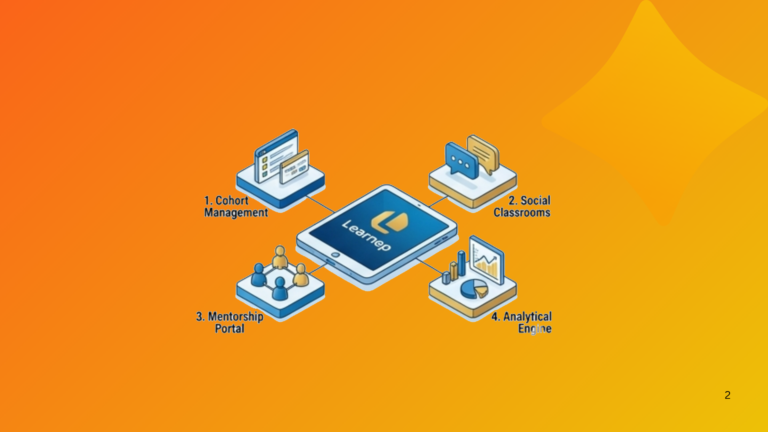
A platform cannot decide whether a gift is acceptable. It can make the decision process consistent and provable. When assessing any LMS for this work, ask whether it can:
- assign different content to different roles automatically, so procurement and sales get the scenarios that suit them;
- require attestation, such as “I have read and understood the gifts policy”, with a dated record;
- capture annual declarations and flag people who have not completed them;
- send reminders and escalate to line managers when training is overdue;
- produce a report that shows completion, scores and declarations by department, which an auditor can read.
If you want to see how those steps would work for your own policies, you can book a demo with Learnep and bring your actual code of conduct to walk through.
Frequently asked questions
Is anti-bribery training legally required for Nigerian employers? The Corrupt Practices and Other Related Offences Act, 2000, as reviewed for this article, creates offences and a duty to report but does not contain a stand-alone training requirement. Training is more often driven by sector regulation, the Nigerian Code of Corporate Governance for the companies it covers, and foreign-parent or customer requirements. Check what applies to your sector with counsel.
Are facilitation payments allowed in Nigeria? Not on the summary tables in the CMS guide, which mark facilitation payments as caught under both the federal and Lagos regimes. Employees should be taught to treat any unofficial payment to speed up an official act as prohibited, to refuse it, and to report the request.
What is the difference between a gift and a bribe? The difference lies in purpose and context: whether the item is given to influence a decision, its value, its timing relative to a contract or approval, and whether it is transparent. That is why training needs a written threshold, a register and a person to ask, rather than a one-line rule.
How often should we run code of conduct training? There is no single legal interval in the sources reviewed. A sensible pattern is an induction module, an annual refresher with role-specific scenarios, and short triggered refreshers when a person changes role or a new tender, agent or supplier relationship starts. The Nigerian Code of Corporate Governance expects directors to declare conflicts on appointment and annually thereafter.