Employee onboarding is a critical process that enables newly hired employees to adapt quickly to an organization’s culture, policies, expectations, and job responsibilities. It involves structured activities designed to orient new staff to the knowledge, skills, and behaviors necessary to perform their roles effectively. In modern organizations, onboarding has evolved from traditional orientation sessions to technology-driven processes using a Corporate Learning Management System (LMS).
A CLMS provides a centralized digital platform that enables organizations to design, deliver, manage, evaluate and optimize onboarding training efficiently. By integrating key CLMS elements, companies can create a consistent, scalable, and measurable onboarding experience that enhances employee productivity and engagement.
Concept of Employee Onboarding
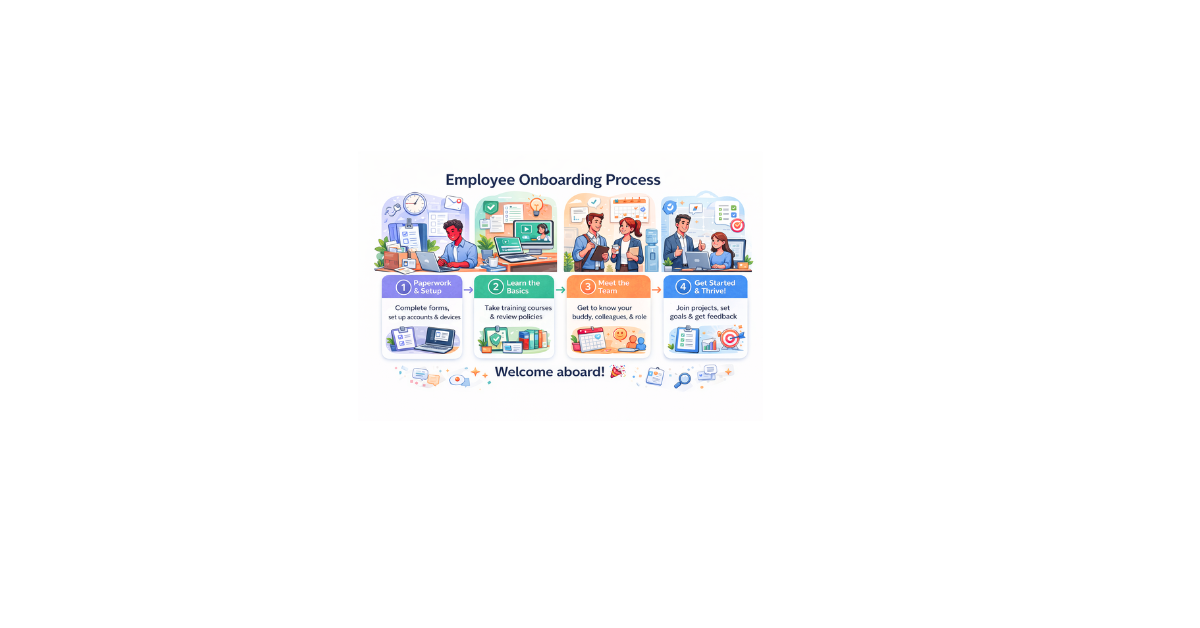
Employee onboarding refers to the systematic process of equipping new employees with the necessary knowledge, skills, and behaviors required to become effective staff/members of an organization. The onboarding process usually begins on the employee’s first day and may continue for several weeks or months depending on the complexity of the job.
The primary objectives of onboarding include helping employees understand organizational culture, clarifying job expectations, building relationships with colleagues, and ensuring compliance with company policies and goals. When supported by a CLMS, onboarding becomes more organized, data-driven and accessible, enabling companies to deliver structured learning paths, automate training tasks, monitor progress, while ensuring that training objectives are achieved.
Top Key CLMS Elements in Employee Onboarding
1. Course Content Management
Course content management is a fundamental element of a CLMS used during onboarding. It allows organizations to create, store, organize and distribute learning materials such as videos, documents, presentations, and interactive modules. During onboarding programs, organizations typically include courses on company policies, orientation videos/ workplace ethics, organizational structure, and job-specific training.
A CLMS element ensures that new employees receive consistent and standardized training materials. It also allows organizations to easily update content whenever policies or procedures change.
2. User Management
User management enables administrators to register and manage new employees on the CLMS and assign them specific onboarding courses based on their department, role, or job level within the organization. Each employee is given an account that tracks their learning activities and progress.
Through user management, organizations can control access to learning materials, track employee participation, and ensure that the right training content is delivered to the right individuals.
3. Learning Path and Course Structure
Learning path management organizes training courses into structured sequences that guide employees through the onboarding process. Instead of accessing random learning materials, employees follow a predefined pathway that gradually introduces them to the organization and their specific job responsibilities.
For example, the onboarding learning path may include:
- Introduction to the organization
- Corporate culture and values
- Corporate policies and compliance training
- Role-specific skills development
- Performance expectations and evaluation procedures
This structured approach ensures that employees gradually build their knowledge and competence.
4. Communication and Collaboration Tools
Communication tools integrated within an CLMS help facilitate interaction between new employees, trainers, supervisors and other learners. These tools may include discussion forums, messaging systems, announcements, and feedback channels.
Through these features, employees can ask questions, share ideas, develop stronger connections and receive guidance during the onboarding process. This interaction helps build relationships and encourages collaboration within the workplace/organization.
5. Content Delivery System
The content delivery system is responsible for presenting training materials to employees through different multimedia formats such as videos, audio recordings, interactive modules, and digital documents.
Using this element, organizations can make onboarding programs more engaging and accessible. Employees can access training content from various devices including computers, tablets, and smartphones, making learning flexible and very convenient.
6. Assessment and Evaluation Tools
Assessment tools are used to measure how well employees understand the onboarding material. A CLMS typically provides quizzes, assignments, and interactive tests to evaluate learners’ knowledge retention and skill development.
For example, after completing a training module on workplace safety or company policies, employees may take an assessment to confirm their understanding. These evaluations help organizations ensure that new employees are adequately prepared for their roles.
7. Progress Tracking and Reporting
Progress tracking is a vital CLMS element that enables organizations to monitor employees’ learning activities. Administrators and managers can view reports that show course completion rates, assessment scores, and learning engagement levels.
This data-driven approach of reporting tools, generate detailed analytics that help organizations measure the effectiveness of their onboarding programs. Organizations can identify employees who may need additional support and ensures that onboarding objectives are achieved.
8. Certification and Compliance Management
Certification management ensures that employees receive formal recognition after completing required onboarding courses. The LMS automatically generates certificates confirming that employees have successfully completed training modules.
This element is particularly important for compliance-related training, such as workplace safety regulations, data protection policies, and ethical guidelines. It helps organizations maintain regulatory compliance while ensuring employee accountability
9. Delivery Methods of Corporate Learning Management Systems (CLMS)
The delivery method in a Corporate Learning Management System CLMS determines how employees access training materials, interact with instructors, collaborate with peers, and apply knowledge to their professional tasks. Effective delivery methods ensure that learning is flexible, engaging, accessible, and aligned with organizational goals. This article examines the concept of CLMS delivery methods, their types, characteristics, and their importance in corporate training.
The choice of delivery method often depends on several factors such as:
- Organizational training objectives
- Nature of the learning content
- Employee learning preferences
- Technological infrastructure
- Availability of trainers or instructors
Modern CLMS platforms support multiple delivery methods to accommodate different learning styles and workplace conditions.
Type of LMS Delivery Methods
Self-Paced E-Learning (Asynchronous Learning) – Self-paced e-learning is one of the most widely used delivery methods in corporate training. In this approach, employees access learning materials independently and complete courses at their own pace, hosting various forms of digital learning resources such as videos, presentations, digital manuals, and quizzes. Learners can access these materials at any time and from any location.
This delivery method offers several advantages. It provides flexibility for employees who may have busy work schedules, allows organizations to train large numbers of employees simultaneously, and enables learners to revisit training materials whenever necessary.
This is used for compliance training, onboarding programs, and technical skills development.
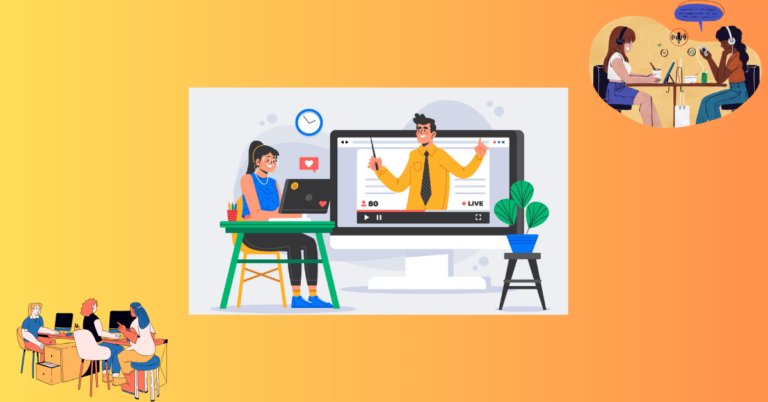
Instructor-Led Training (ILT) – Instructor-Led Training involves a trainer or facilitator delivering learning sessions directly to employees. In the context of CLMS, instructor-led training can be conducted either in a physical classroom or through virtual platforms.
Traditional classroom-based training allows learners to interact directly with instructors and participate in discussions, practical demonstrations, and group activities. Virtual instructor-led training uses video conferencing tools integrated with the CLMS to conduct live online sessions.
This method promotes immediate feedback, active engagement, and collaborative learning. It is particularly useful for complex topics that require explanation, demonstration, or practical exercises.
Blended Learning – Blended learning combines online learning with traditional instructor-led training to create a more comprehensive learning experience. In this approach, employees first complete online modules through the CLMS and later participate in face-to-face or virtual sessions for further discussion and practice.
Blended learning takes advantage of the flexibility of digital learning while maintaining the interactive benefits of classroom instruction. It enhances knowledge retention and encourages employees to apply theoretical knowledge in practical situations.
Many organizations use blended learning for leadership development, professional training, and specialized skill development.
Mobile Learning (M-Learning) – Mobile learning is a delivery method that enables employees to access training materials through mobile devices such as smartphones and tablets. Modern CLMS platforms are designed to support mobile-friendly interfaces, allowing learners to participate in training programs anytime and anywhere.
Mobile learning is especially useful for employees who work remotely or in field-based roles, such as sales representatives, technicians, or service personnel.
Through mobile learning, organizations can deliver short lessons, instructional videos, quick reference materials, and assessments directly to employees’ mobile devices. This approach increases accessibility and ensures that learning can occur outside traditional office environments.
Microlearning – Microlearning is a delivery method that focuses on providing short, focused learning units that address a specific topic or skill. Each learning module typically lasts only a few minutes and is designed to deliver concise information.
In a CLMS environment, microlearning modules may include short videos, infographics, flashcards, or brief quizzes. These learning units are easy to consume and help employees quickly acquire new knowledge without interrupting their workflow.
Microlearning improves information retention and is particularly effective for continuous professional development and performance support.
Social Learning – Social learning emphasizes collaboration and knowledge sharing among employees. Within a CLMS platform, social learning features may include discussion forums, group projects, peer feedback systems, and knowledge-sharing communities.
Through these tools, employees can exchange ideas, discuss work-related challenges, and learn from each other’s experiences. Social learning encourages teamwork and fosters a culture of continuous learning within the organization.
Organizations often use social learning to promote innovation, encourage peer mentoring, and facilitate knowledge transfer between experienced and new employees.
Simulation and Scenario-Based Learning – Simulation and scenario-based learning involve the use of interactive environments that replicate real workplace situations. These simulations allow employees to practice decision-making, problem-solving, and technical skills in a safe and controlled environment.
In a CLMS, simulations may include virtual role-playing exercises, interactive case studies, or software-based training environments. This delivery method is particularly valuable in industries where practical experience is essential, such as customer service, healthcare, engineering, and aviation.
By practicing real-life scenarios, employees gain confidence and develop the ability to apply theoretical knowledge to practical tasks.
Benefits of CLMS-Based Employee Onboarding
i. Improved Training Consistency: An LMS ensures that all new employees receive the same standardized training materials and information, reducing inconsistencies in the onboarding process.
ii. Improved Learning Efficiency and Flexibility: Employees can access training materials at their own pace and revisit content whenever necessary, improving knowledge retention.
iii. Increased Employee Engagement: Interactive multimedia content and collaborative tools make onboarding more engaging and enjoyable for employees.
iv. Efficient Monitoring and Accountability: Managers can easily track employee progress and evaluate learning outcomes using built-in reporting tools.
v. Scalability and Cost Efficiency: Organizations can onboard large numbers of employees without significantly increasing training costs, as the LMS automates many administrative tasks.
Challenges and Considerations of LMS-Based Onboarding
Despite its advantages, implementing CLMS-based onboarding may present certain challenges. Organizations must ensure that the platform is user-friendly and accessible to employees with different levels of technological proficiency. Additionally, training content must be regularly updated to remain relevant and effective, reflecting organizational changes and industry developments.
Conclusion
Employee onboarding powered by LMS elements is no longer just an operational process—it is a strategic driver of employee success and organizational growth. By integrating structured learning paths, interactive content, real-time assessments, and performance tracking, organizations can create a seamless onboarding experience that accelerates competence, builds confidence, and fosters long-term engagement. When done right, LMS-enabled onboarding transforms new hires into productive contributors faster while strengthening alignment with company goals and culture.
As the workplace continues to evolve, organizations that embrace innovative, learner-centered onboarding approaches will stand out in attracting and retaining top talent. If you’re ready to elevate your onboarding process and unlock the full potential of your workforce, we invite you to explore more insights, tools, and solutions on our websitehttps://learnep.com/. Discover how to turn your onboarding strategy into a powerful engine for performance and growth.